
Design Challenge
The Green Suits, a small and medium business recruiter, wanted another way to reach companies to encourage them to build sustainability and corporate social responsibility initiatives to attract Millennials. Indeed and LinkedIn were disrupting the recruiting market. The Green Suits also found their social media and blogging efforts weren’t working. They needed another way to reach companies interested in recruiting Millennials.
Client
The Green Suits recruited sales and marketing talent for small and medium companies nationwide. Dan Smolen, the Managing Principal had a background in radio and I suggested they leverage podcasting since “Serial” was the hotest podcast around. Green Suits Radio was born.
User Need
The Green Suits wanted to understand the podcast listener. The question asked was “Why people listen to podcasts?” since no secondary information was available to answer the question.
Deliverables
Presentation on research findings and recommendations.
· High Fidelity prototype
· Artifacts documenting research and design decision
Constraints/Role
Timeline: 3 Months
Team: 4 people
Role: Design Thinking Researcher, UX Designer
Research Takeaways
Methodology
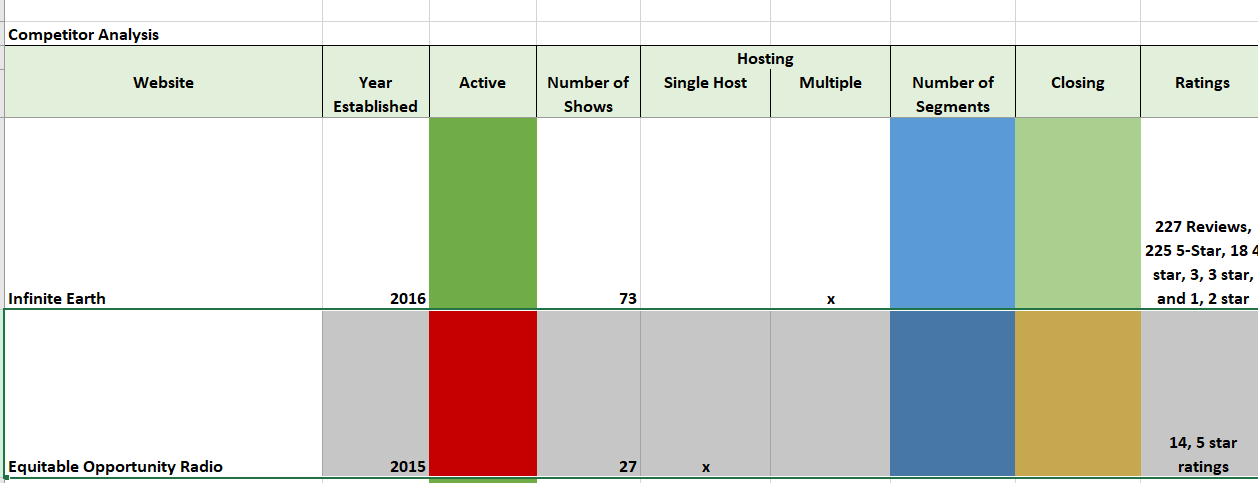
Since I was new to podcasting and rarely listened to podcasting, I started with secondary research to understand the origin of podcasting, the market size, who does it well, and reviewed research papers that talked about the who is listening. Out of the research, I came away with the following questions:
· Why are people listening to podcasts?
· How do they make decisions about which podcast to listen to?
· Which types of podcasts are they listening to?
To get that information, I built a discussion guide and recruited people through LinkedIn and Twitter social media to find people who indicated they listen to podcasts as well as reaching out to business professionals. For the research, I:
1. Interviewed a total of 10 men and women, around the country, who do and don’t listen to podcasts, ranging from 40-60 years old. We focused on asking why they listen, how they make decisions about which podcasts they listen to, and what stops them from listening.
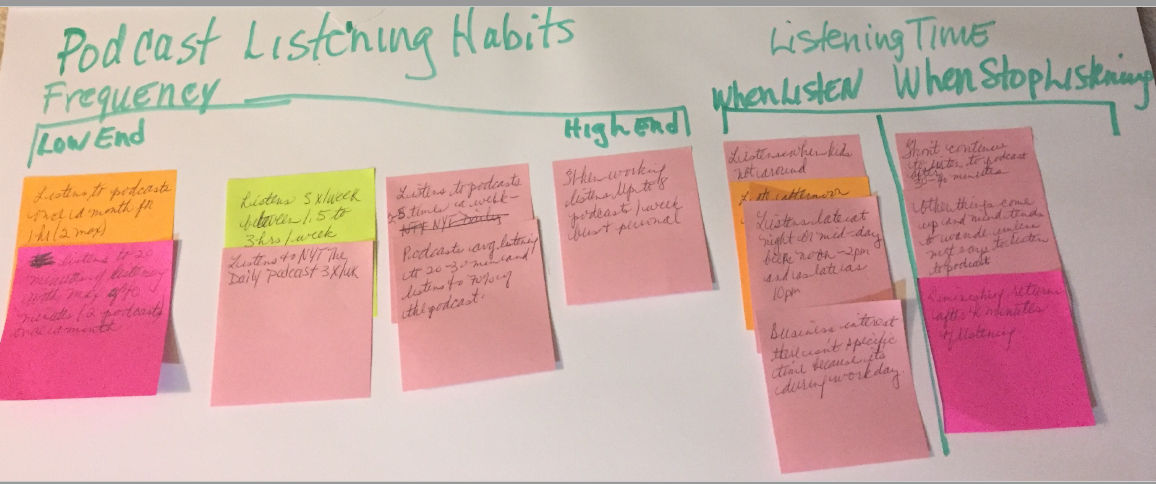
2. Created an affinity map to identify the themes for why they listen and what they want from a podcast.
3. Conducted a card sort using Optimal Workshop, developed User Flows, and Website Sitemap, and developed personas.
Research Takeaways
1. The audio quality of the podcast was critical. Some listeners make decisions on which podcasts they listen to within the first 5-7 seconds of the podcast.
2. Listeners make a decision about the podcast based on the host, the topic, and then the guest. If you have Oprah as the guest, then they’ll make the decision on the guest, first. Key to make sure the guest is of equal status with the host.
3. The website is the first place listeners go to when evaluating the podcast, the host, and the guest if they’re new to the podcast.
4. Identified two personas, Richard the Rapid and Victoria the Validator. Richard wants the information quickly while Victoria wants to validate that the podcast is worth her time to listen.
Implementation Takeways
1. Revamped the podcast format to create an “ear worm” for Richard the Rapid who will make a decision on whether they’ll listen to a podcast within the first 5-7 seconds or they will move on.
2. Implemented a structure to improve the host’s efficiency when interviewing guests in one sitting. This allowed the host to up the level of storytelling to create engagement, create multiple episodes, and shorten the length of a podcast to the standard 30 minute range.
3. Aligned the presentation of the podcast episode on the existing website to align it with the way the personas made decisions about the podcasts they chose to listen to.
4. Budgeted for the design of a new website for the podcast.

Rapid Prototyping and Usability Testing
Rapid Prototyping
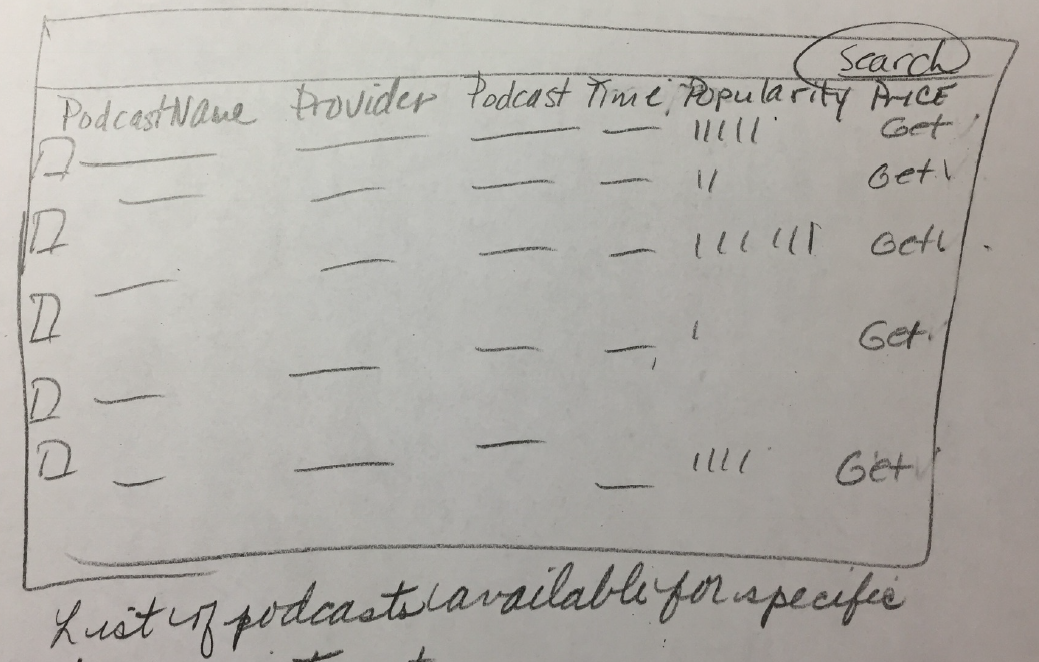
Both personas rated the website as their number one resource for learning more about a podcast. Iterated the prototype twice, beginning with the existing website and iTunes podcast.
Usability Testing
Conducted three usability test interviews where users 40-60 years old were asked to perform three different types of tasks.
High Fidelity: Testing of Existing Website and iTunes Platform
Round 1: Testing Insights
Users didn’t understand what the podcast was about. They felt like the focus on the guest and the topic didn’t resonate with them because their first point of decision was evaluating the host since that was the starting point for determining the credibility of the podcast. The topic was the second point of consideration, with the guest as the last point of consideration.
The visual aspect of the website matter tremendously. If the website didn’t look modern and up-to-date, reflecting their issues and concerns, they were less likely to listen to the podcast.
The podcast topics were too narrow. Listeners didn’t feel seen, therefore they would choose not to listen.
Round 1: Items Changed
Changed the way the podcast was presented on the website and in iTunes, leading with the host, then the topic, and the guest was last
Made note of the fact that a website redesign was necessary.
Broadened the topics and the people appeal to in the podcast. This included adding entrepreneurs as a target audience for interviews, along with second acts and people entering the workforce.

Initial thought on how listeners make decisions on podcast listen to.

Feedback on actual way decide on which podcast to listen to.
Low-Fidelity: Paper Prototype of New Website and iTunes Format
Reviewed the first draft of the website sitemap to understand navigation and content. Conducted card sort in Optimal Workshop and produced a clickable format in MarvelApp.
Round 2: Testing Insights
The navigation was not straight-forward. Had too many topics to cover on the website.
Information on the host, establishing credibility, matters on the website.
Added the category of Community to the website sitemap and ensured the description of the podcast included entrepreneurs.
Round 2: Items Changed
Reduced the number of topics on the website from 30 to 15.
Culled down the information on the host to include on the website.
Added the category of Community to the website sitemap and ensured the description of the podcast included entrepreneurs.

Sitemap after prototype discussions.
High-Fidelity Usability Testing
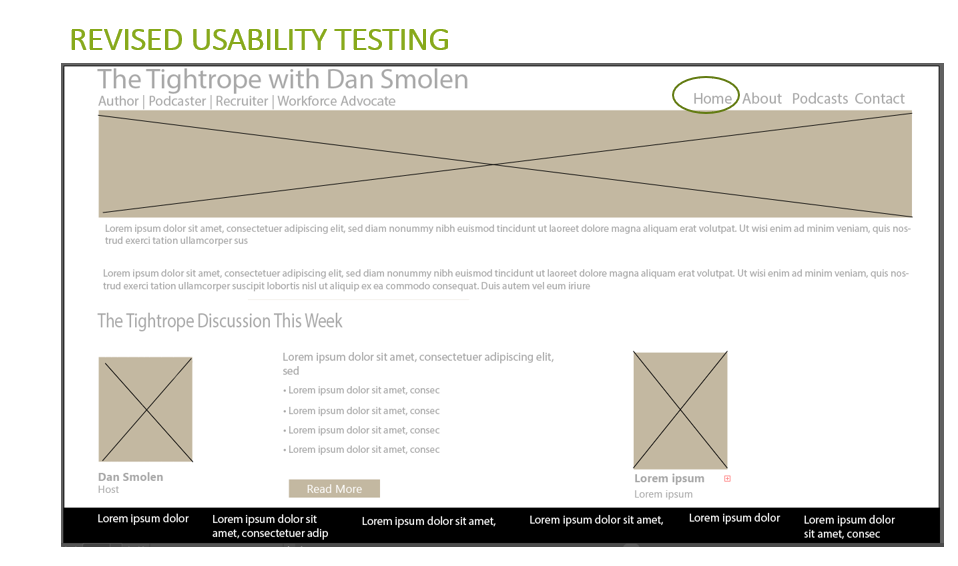
Asked users to perform three tasks to provide feedback on the navigation, functionality, and content provided in the sections as a clickable test in MarvelApp.
Round 3: Testing Insights
Consolidation of host information in the about section made a lot more sense because they could read up on the host in one place.
Photograph of the Podcast of the Week needed to include the photo on the topic not the guest.
What we defined Community as didn’t match with what the listener defined community as.
Round 3: Items Changed
Photograph of the topic instead of the guest is how the podcast episode is introduced visually.
Community move to Phase II because we couldn’t deliver and build that out in the first phase since we needed to attract the Community.
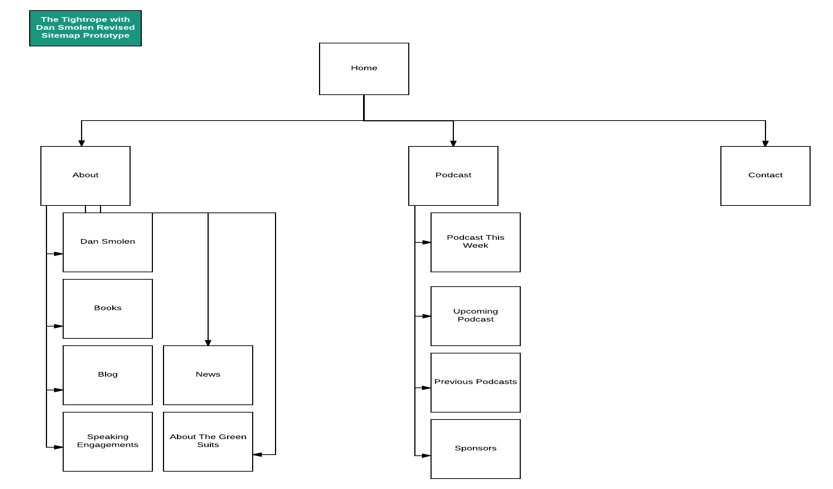
Sitemap Post Usability Testing.
Rebranding of the Podcast
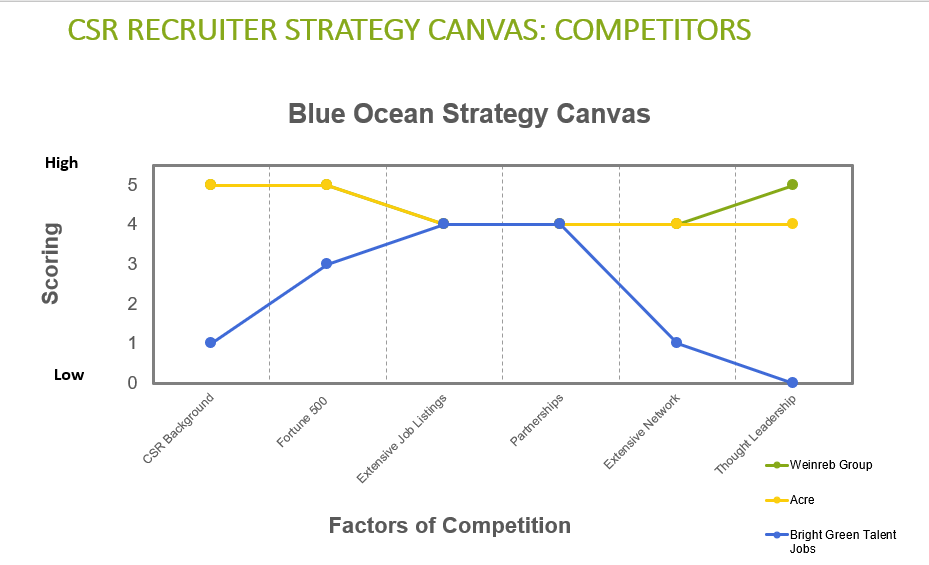
After the 2016 Presidential Election, the client and I discussed whether Green Suits Radio’s focus on sustainability and corporate social responsibility still made sense. Based on the Blue Ocean Strategy Canvas where sustainability recruiters, and sustainability, corporate social responsibility, and career podcasts were evaluated, we decided it didn’t make sense. The data indicated that competitors had greater audiences and credentials.
What we realized is sustainability and corporate social responsibility were symptoms of a larger issue - the redefinition of work. Therefore, the podcast was rebranded with a focus on exploring meaningful work.
Where are We Now?
· Podcast has been rebranded as “The Tightrope with Dan Smolen.”
· Client exited the recruiting business to focus on podcasting full time.
· The website redesign was recently completed.
Things I Learned:
Rapid Prototyping:
When a client has an existing platform, you need to understand what users think of it before deciding whether to scrap it or what changes can be made.
Usability Testing:
Be observant of what the user is doing vs what they’re saying, especially when they’re moving from task to task. What they say at the beginning of the testing process may change as they complete subsequent tests.
Research and Feedback Implementation:
Continue to test and validate the feedback users give during the prototyping and testing. Just because a user suggests something that may sound like a great idea, the reality is it may not be viable or feasible immediately. Be willing to move it out to a later phase if it still makes sense.
Also, be willing to challenge assumptions as the market and user changes. It may make the difference in finding the right target audience.
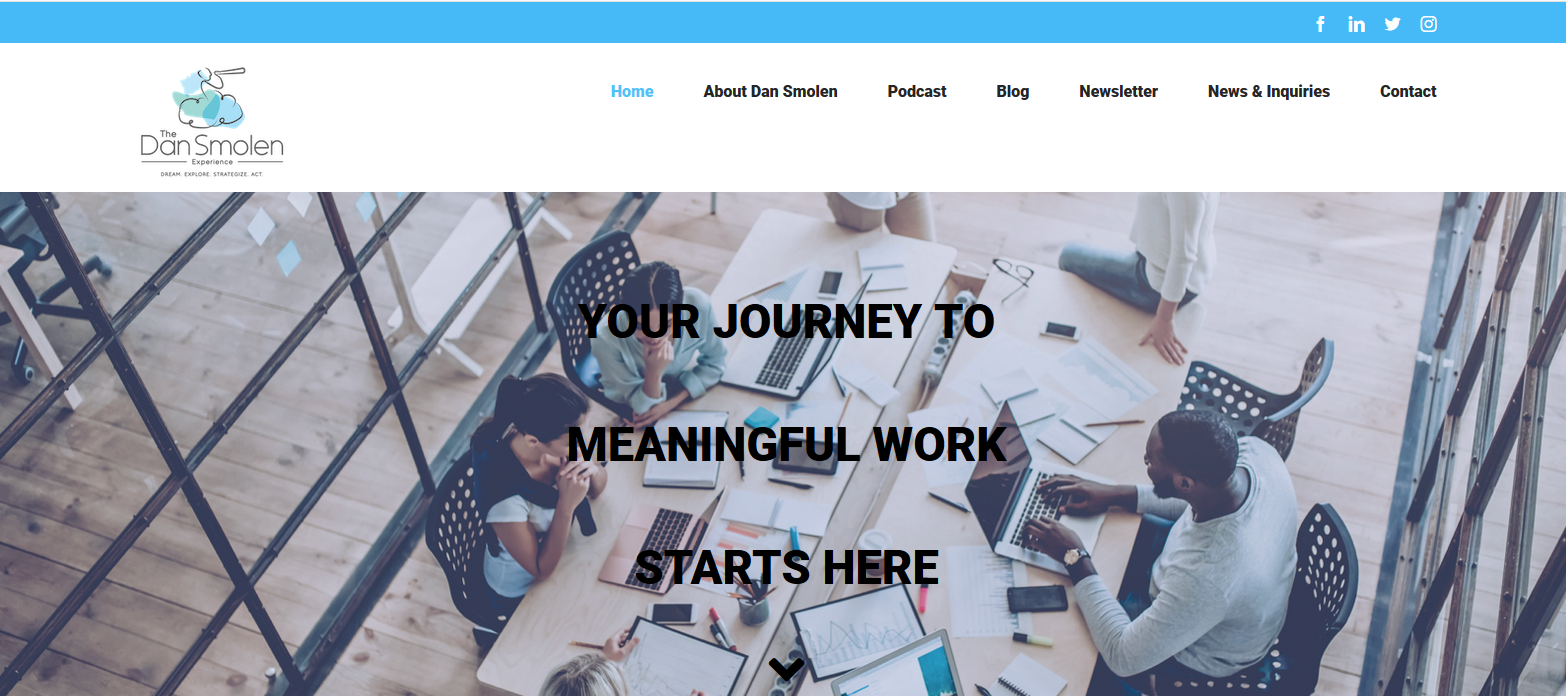
Final version of the Dan Smolen website.
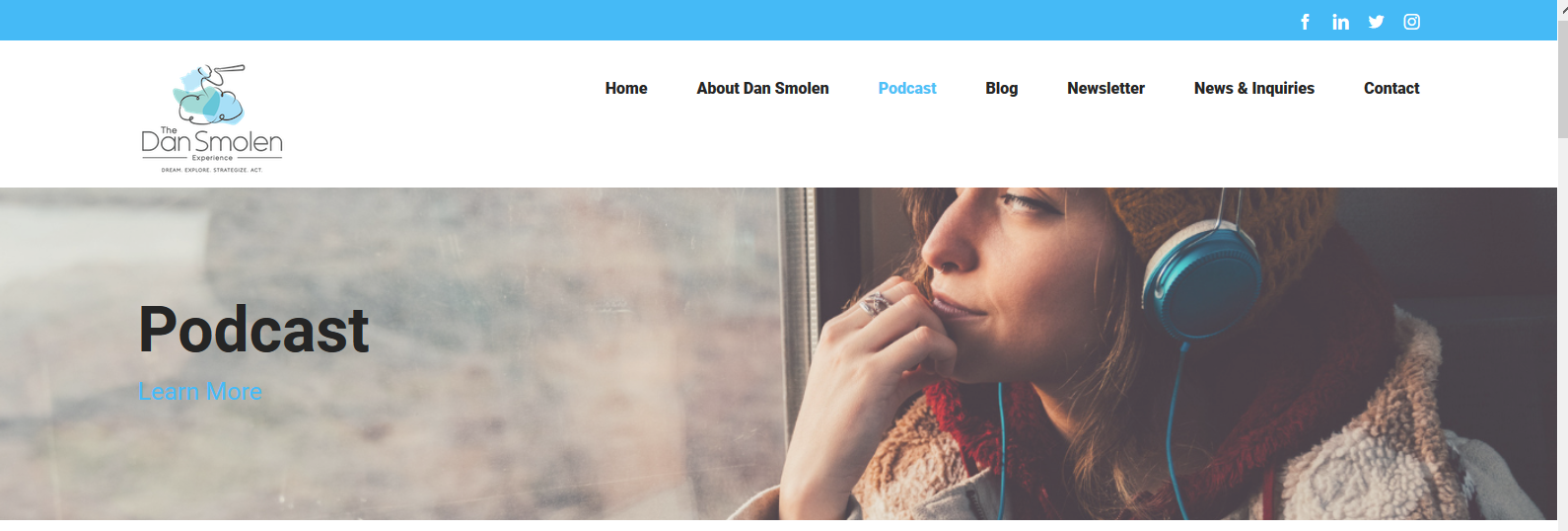
The Tightrope with Dan Smolen Podcast.