Thought Leadership
Personalization is the implementation of empathy that drives connection and revenue

My Journey Through AI: Part I
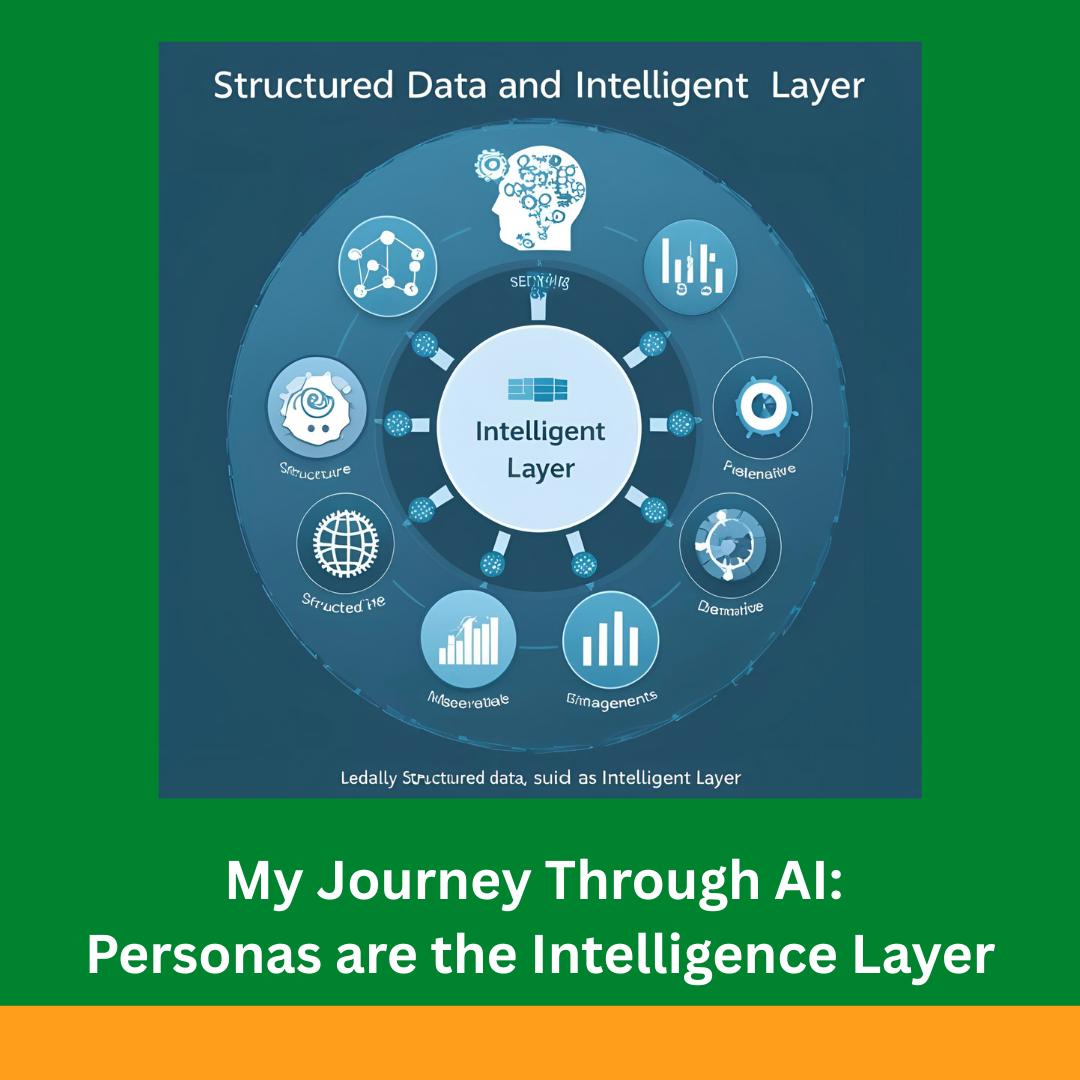
During my MIT No-Code AI course, I was exposed to various data types, ranging from structured data, which is organized data that's searchable, to unstructured data that isn't searchable and predefined. We can use these different data types to change how we build and think about personas.
I believe that B2B firms' personas will no longer be generic and static. Instead, with AI, personas will "always be on" and we'll "always be learning," turning them into a critical Intelligence Layer for your business.
Today, many firms have personas based on:
👥 Demographics: Represents the target audience segmentation information, i.e., the CEO is between 40 and 45 years old, has been in that role for 5 years, has a B.S. in engineering, and previously served as a product director.
🏢 Firmographics: Provides business context about the firm, such as $50M in revenue, located in the suburbs, and firms with between 500-999 employees in the insurance industry.
🧠 Psychographics: Behavioral understanding of a digital-first, data-driven company focused on risk mitigation.
This data is generally available for many firms' marketing, sales, and customer success. In some cases, the psychographics sit in the heads of the sales teams. However, firms have more data available to understand their customers than they're using:
📊 Structured data. This data sits in presentation decks, spreadsheets, and databases. It also includes zero-party data like survey-predefined answers. First-party data includes web analytics, second-party data such as customer upsell history, and third-party data like social media demographics.
As their Intelligence Layer, organizations can continually capture structured data and mine it using regression and classification analysis to identify patterns in the data. It can inform how the persona is changing. In times of uncertainty, this becomes critical when customers' buying behaviors change in real time, or in times of certainty when customers embrace a trend and purchase a solution in droves.
Identifying new patterns can enable firms to personalize your response to individual customers:
💡 Enable Product Marketing to adjust a product mix and messaging for the strategic Procurement Officer to encourage her to continue investing in a strategic solution at a slower pace to manage the CFO's concern about cash flow.
🎯 Provide Account Executives with specific questions and tools to probe and identify new problems they can proactively solve for Procurement Officers to close the deal.
⚡ Empower Onboarding and Customer Success teams to proactively address potential implementation delays to address cash flow challenges by adjusting payment strategies so firms can better manage budgets.
As a forward-leaning firm, how are you leveraging AI and structured data to redefine your personas?
My Journey Through AI: Part 2

Did you know that 80% of the new data incoming for firms is unstructured, according to Gartner? What's surprising is that for enterprise firms, this accounts for 80% of their data. With the type of unstructured data available, I believe this represents a significant opportunity for forward-leaning firms and CMOs to dive into unstructured data to identify new intelligence to inform their personas.
What is unstructured data?
Unstructured data exists in various formats, including text, video, images, and social media. These formats encompass zero-party data, which is text data filled in a survey; first-party data, which includes emails; and third-party data, which includes social media text.
What makes it an intelligence-rich layer are:
📊 Variety of formats. According to Forbes, almost 50% of Gen Z use social media instead of search engines, followed by Millennials at 35%. On the video front, about 60% of Gen Z use and between 50% and 80% of Millennials use YouTube and TikTok. For Gen X and Baby Boomers, YouTube is the primary platform, with between 8% and 25% using TikTok.
These rich forms of intelligence provide firms with multiple modalities to quickly understand and personalize it for Gen Z and Millennials. To ensure Gen X and Baby Boomers aren't left behind, firms will need to prioritize YouTube and social media.
🤖 New formats, new insights. Large Language Models (LLMs) like Perplexity, Claude, or ChatGPT can read large volumes of text data, summarize, and conduct sentiment analysis. This provides quicker insights into how customers feel about or engage with your product.
For sales, it means they can personalize their presentations to align with the customers' personas and predict the anxieties and goals they have. Marketing can adjust the messaging and roll out new content to address the questions early in the sales process.
🎯 Discover new segments. With unstructured data, firms can augment existing personas, deepen those relationships, and eliminate the unprofitable personas. New personas can also be created based on uncovering new customer behaviors and segments.
✨ Personalization at scale. As firms integrate the use of structured and unstructured data, they will become more strategic in their approach to data collection and governance to deliver a personalized customer experience. Its success requires an end-to-end vision of how the entire organization manages its data portfolio. According to Accenture, 74% of customers value it when firms consistently match and maintain their communications preferences.
Forward-leaning firms building an intelligence layer must embrace both structured and unstructured data, as each contributes unique benefits to the development and personalization of personas. When customers are understood, they buy.
How are you using unstructured data to enhance your personas?
My Journey Through AI: Part 3
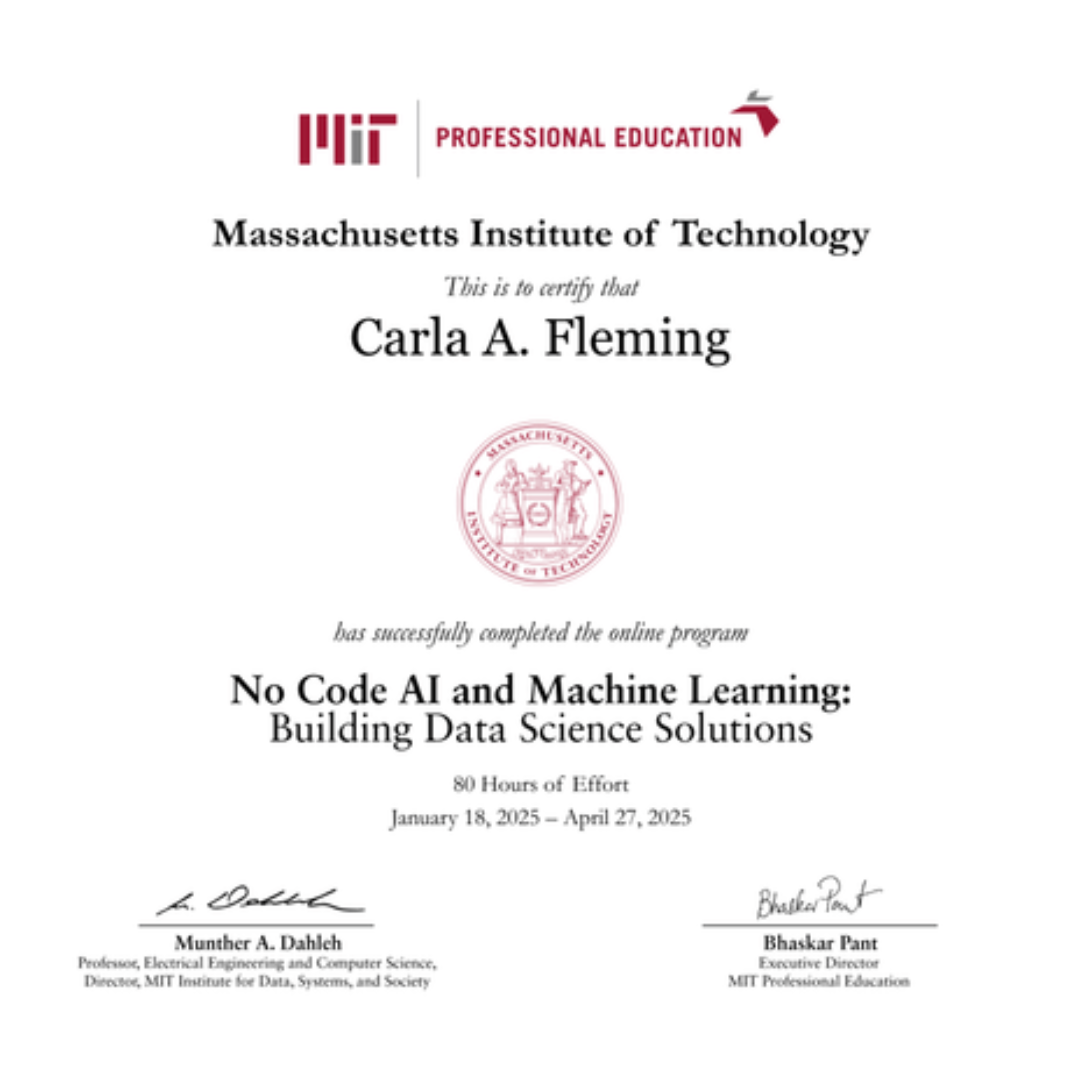
I am so delighted to share that I completed the MIT Professional Education no-code AI/ML class! My goal was to gain a deeper understanding of AI and its applications in personalization.
What have I learned?
🌟 How it works. AI has multiple components, like Generative AI, Deep Learning, and Neural Networks. The program delved deeply into how each one works and how to use it with structured data (data in databases and spreadsheets) and unstructured data (such as pictures, text, audio, and video).
🤖 Cutting Edge Technology. We conducted a hands-on case study using Google's Teachable Machine to build, train, and test a model on images of rice, classifying the different types. This is a technique more e-commerce companies may use to sort inventory, saving time and money.
⚖️ Explaining AI Limitations. Every technique and method has its advantages and limitations. For example, a Decision Tree is used to identify the patterns and behaviors to explain customer decision-making outcomes. However, the larger the decision tree, the more it approaches infinity, and creates a black box situation where it’s difficult to explain the model’s prediction. Understanding the limits is key.
📊 Overcoming My Fear of Statistics. At the program's outset, most participants were somewhat rusty or unfamiliar with statistics. MIT’s prep classes were excellent because they grounded discussions in the history of statistics and how it’s an integral part of AI. Over time, I became more comfortable with specific aspects of statistics used to evaluate whether models were overperforming or were sufficiently fine-tuned.
🧠 Changing the Way We Think. AI requires parallel thinking. It requires stakeholders to do things simultaneously: anticipate the outcome that answers the question, and consider the policy implications and consequences of automating the decision.
For example, who should we personalize or recommend a product or service for? What is the precise customer journey when we should make that recommendation to address a specific customer emotion, such as fear or confusion? When have we crossed the line? This is where human intervention becomes key when using AI.
📱 Changing the Way We Work. Today, no one does sums in their head when a calculator is on their phone. Just like the calculator, AI is a tool that provides answers to questions, helping to quickly advance insights. We have to check for accuracy.
What’s Next?
The journey continues. With over 30 case studies to ponder, I’m looking forward to integrating AI more deeply into the growth strategy work I do. This includes leaning into agents to automate specific processes.
As I was explaining to a friend over lunch, lean into AI. Start small and experiment. You’ll be surprised at what you can learn with small steps as you build an AI habit. Then, perhaps you take an AI course and share your experiences.
Personalization of Product Marketing and AI
🌍 Did you know that 40% of Millennials and GenZ B2B buyers want a direct and personalized purchase experience much earlier in the process? According to Forrester, the buyers want the offerings specifically tailored to their needs. In talking with a CX expert about personalization, I believe AI provides a unique opportunity for us to disrupt how B2B Product Marketing and Product Management work when it comes to product discovery and go-to-market (GTM). If we don’t use AI to disrupt, firms will quickly lose customers during the pre-sales and renewal process.
🤖 Personalization is the new table stakes for these B2B buyers, requiring Product Marketing to move beyond industry and personas tied to job titles because AI will own this.
Instead, Product Marketing will need to be more strategic:
🗺️ Defining the customer journey early in the discovery process is crucial. Product Marketing must build the customer journey map and deeply understand the customer at the same time as the Product Management team is conducting product discovery. Why? Waiting for the product to be completely defined before building out the go-to-market will put Product Marketing and the company behind the curve in understanding the customer's emotional touchpoints and language throughout the customer journey.
💗 Customer emotions are becoming a key factor for B2B. According to Salesforce, 86% of customers are more likely to buy, but they feel only 59% of Sales understand what their goals are. Recognizing the underlying emotional goals, the roadblocks, and the language customers use throughout the customer journey will affect how Sales and Marketing personalize the conversation. The blurring of consumer and business experiences for Millennial and GenZ buyers will become the deciding factor for whether firms win or lose the customer, creating greater expectations for Sales, Marketing, and Customer Success.
💰 Personalization is strategic and profitable. Tighter integration between Product Management and Product Marketing teams puts the focus on identifying unexpected gaps to close or opportunities to pursue sooner in the GTM process. Product Marketing can harness AI to customize and test new messaging and offerings in the hands of Sales and Marketing sooner. This allows the firm to strategically differentiate itself from the competition, drive sales and retention, meet the customers where they are, build trust, and deliver profitable outcomes.
How do you think personalization will change the way Product Marketing operates?
Google Pumps the Brakes on the Cookie Purge: What CMOs Need to Consider
The cookie isn't going to crumble – yet. Google's attempt to phase out 3rd-party cookies for "targeted advertising" creates more revenue challenges for advertisers while potentially benefiting Google. This has led Google to reconsider ending 3rd-party cookies for "targeted advertising."
I believe forward-thinking CMOs must stay the course and continue to tackle how to build their data strategy without 3rd-party cookies because the move to personalization will rely increasingly on a host of new types of data. Understanding customer intent will require CMOs to add new ingredients to their data strategy recipe, including:
🔮 Alternative Data: What other data sources could provide CMOs with signals about changing customer behaviors and markets? Imagine a customer sponsor is moving to another company. Could this signal a switch to a competitor's product? Are industry signals, such as investments in new technology equipment purchases, pointing to a functional team's maturation as a company? That could mean a company that wasn't a candidate for your solution is now ready to be marketed to on a thought leadership level.
🧩 Identity Results: This data identifies how consumers interact across mobile, websites, and social media advertising platforms. While 3rd-party data isn't a thing of the past, CMOs should keep tabs on advertising vendors developing new solutions and be ready to test the solutions to close this gap.
🎯 Contextual Advertising: You've seen these types of ads that sit on a website and serve up ads based on the content on the website, like an ad for a dress from your local department store or an ad for a computer discount on the website for best computers for college students. Contextual ads will provide an opportunity for deeper learning about your customer and their preference so you can personalize the experience for the customer.
🏆 Zero and First-Party Data Prioritization: CMOs must prioritize what's most important to understand about the customer. Is it intent, preference, and learning about their behavior, or getting the customer's contact information?
Getting the customer's contact data without understanding whether this is your target persona may impact lead quality. Spend the time and use AI to understand who is and isn't your customer. The more you know about the customer, the better you can equip the CRO with the right data that accelerates the sales process.
CMOs are living in an exciting time as the cooking purge will allow them to spread their wings and soar toward a more ethical, customer-centric future. When firms can personalize the content and experience, customers feel more understood. When customers are understood, they buy.
Is your firm putting the brakes on purging 3rd-party cookies, or are they testing new data recipes for their data strategy?
The Cookie Purge

"The Cookie Purge: Why Smart CMOs Are Feasting on First-Party Data (and Product Marketers Are the New Chefs)"
With the demise of third-party cookies scheduled for early 2025, I believe we're not facing a loss of data but a feast of opportunity for CMOs and Product Marketing alike. Companies transitioning from cookies to zero and first-party data are unlocking significant rewards, with a 2.9x increase in revenue and 1.5x cost savings. This represents a shift that will redefine how CMOs will serve up value to customers and companies.
Over the past several years, the appetite for using cookies has declined. Over 40% of consumers continuously reject consent banners. The implementation of strict GDPR/CCPA regulations, Apple’s privacy stance, and the rejection of third-party cookies used by advertisers to personalize content on Apple’s Safari browser have led Google to remove third-party cookies from its menu.
How will CMOs navigate to the cookie purge? They will need to:
🔍 Reimagined Ingredient Sourcing: First-party data, our new premium ingredient, is collected from our own assets like the website, customer purchase history, and log-in credentials. We need to work closely with marketing, sales, and customer success teams to gather and analyze this data. Product Marketing will use the data to craft more accurate buyer personas and customer journey maps because CMOs will expect us to turn this raw data into actionable insights that drive Go-to-Market strategies.
🍳 Cooking Up Personalized Experiences: Zero-party data is our secret sauce. We must create compelling reasons for customers to voluntarily share their preferences directly. This means designing innovative quizzes, surveys, content, and feedback loops to encourage data sharing. CMOs will look to us to translate the nuance into personalized experiences that keep customers coming back for more.
🚀 Serving Up Predictive Analytics: With first and zero-party data as our base, CMOs and the company can develop predictive models that anticipate customer needs from end-to-end. This isn't just about personalization; it's about proactive product development, marketing and sales strategies, and generating customer loyalty, enabling the firm to stay ahead of the curve.
The shift to zero and first-party data empowers CMOs and Product Marketing to work closely together to create deeply personalized B2B experiences that will elevate our products.
The CMO’s success will depend on interpreting and acting on this rich data to craft the recipes for a feast that will determine our company's success in this new era. This is more crucial than ever.
So, how are you moving into the cookieless era? What have you learned using zero and first-party data?
The AI CMOs: The New CEOs
The AI CMO Could Be the Next CEO
Imagine a world where the next B2B CEO is the current CMO. Because of the customer experience you deliver, you have the ear of every top firm client and their customers. Sales and product-led firms will become customer-centric organizations. Your firm is the trusted advisor, helping clients reimagine their business based on future trends. This allows you to structure the pricing according to a percentage of the future value your clients will get.
Far out? With 33% of CMOs partially or fully owning the adoption of AI in companies, second only to 35% of CEOs, according to Forbes. CMOs will also drive 85% of the increased investment in AI by 2025, notes Gartner. I believe forward-leaning CMOs who implement AI at scale will be the leaders responsible for reimagining firms. It will also make them the top candidates for becoming the next CEO.
AI CMOs will challenge firms to:
🏗️ Establish a new organizational structure: The realignment of Marketing, Sales, and Customer Success teams as one end-to-end set of customer experiences will make the product- and sales-led structures a thing of the past. The AI insights will allow these functions to operate off a single repository of data, ensuring a consistent understanding of the customer and the desired outcomes.
🎯 See personalization as a strategy: Aligning Marketing, Sales, and Customer Success to speak with one voice to a specific customer throughout the customer journey. It's about anticipating and removing roadblocks quickly and knowing the client's desired outcome by customer segment.
🔧 Personalize Outputs: Implementing the personalization capabilities will require new investments in Large Language models (LLMs), which use extensive data sets to train, identify patterns, and provide insights for complex tasks, like identifying unique customer segments to pursue. Small Language Models (SLMs) are smaller data sets trained to specialize in particular domains or tasks, like creating company personalized collateral for a specific communication style.
🤝 Understand the client's customers: Building experiences throughout your entire process doesn't end with the client. It's also about your client's customer. It's understanding whether you're helping to achieve your client's customer's outcomes, such as making the experience with your tool as frictionless as possible. This may enable you to adjust your pricing to demonstrate long-term value. Those who do will become your client's trusted advisor.
AI CMOs have data insights at their fingertips that were once unimaginable. However, their ability to harness those insights while protecting the privacy of the client and the customer will be critical to avoiding reputational harm.
The next CEOs will demonstrate value and can significant company growth.
What do you think of the impact the AI CMO will have?
Mental Models & AI
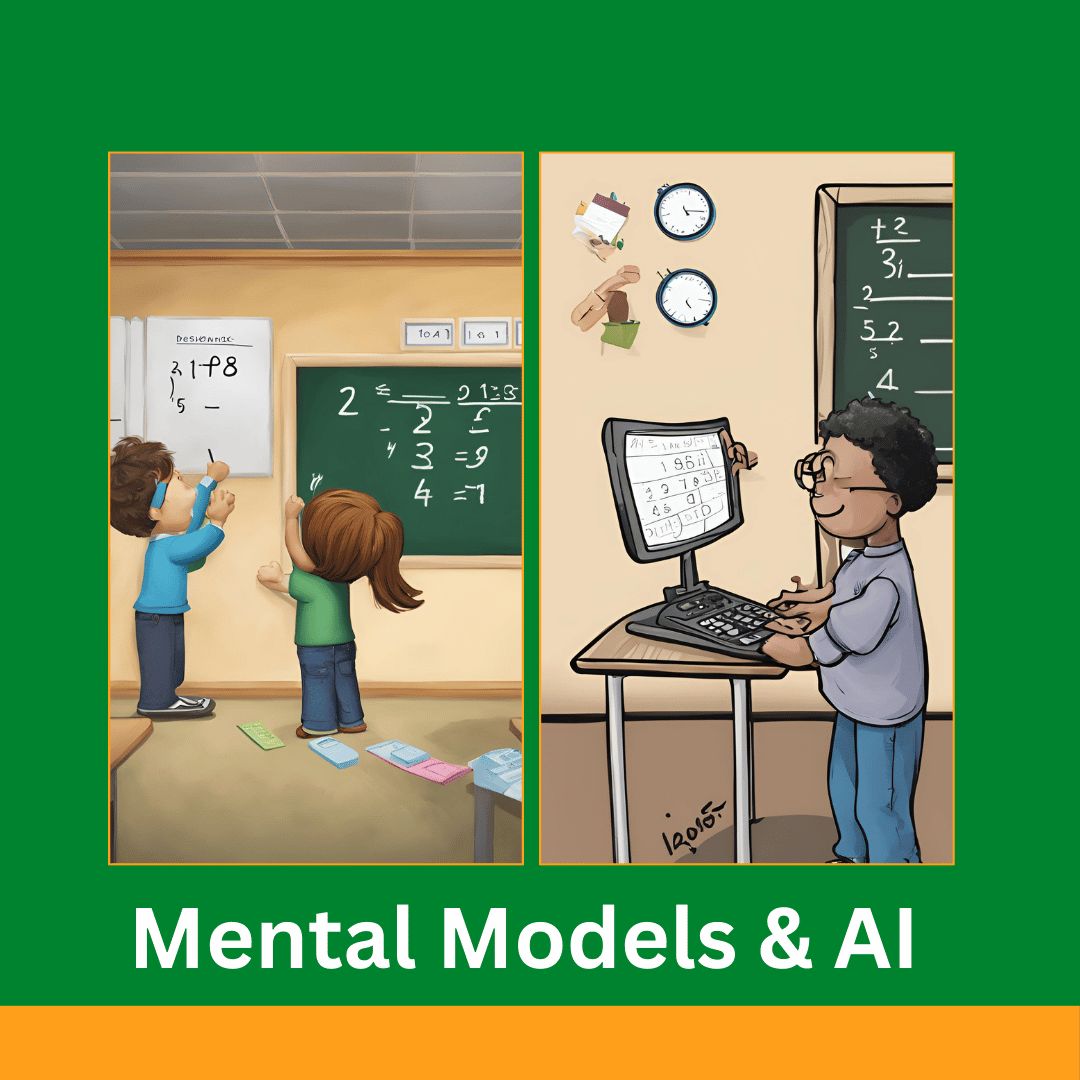
It took us 380 years to transition from doing long division by hand, created in the 1600s by Henry Briggs, to calculators in the 1970s and spreadsheets in the 1980s. For many people, this required adapting their mental models, which are the belief systems, values, and expectations about how they use and engage with a product that they can trust. I believe AI will have a huge impact on mental models for product marketing leaders and how we communicate the value of our solutions.
According to Gartner, with generative AI at peak hype cycle, users have moved from technology awareness and experimentation to incorporating it broadly into their solutions. This is where it gets interesting because of Google’s recent study on how AI is reshaping how our products work:
🔹 Balancing expectations is more than just the roadmap. We must get beyond the hype of AI as new features are rolled out and set expectations grounded in the reality of what AI can do today and where our roadmap is headed. The level of dynamics AI introduces into the market requires an understanding of what their mental mindset is about AI. What do they believe it will deliver at this moment and what will be required to adjust the mental mindset?
🔹 Anticipatory Thinking will be key. Navigating the AI landscape will make Product Marketing leaders more crucial than ever. Our role is the strategic glue that aligns the product value and communicates the value for the Product Management, Sales, Marketing, and Customer Success teams. It requires thinking ahead about the types of customer mental models that exist today about AI and digging into where the new capabilities will take the customer. This will drive how we personalize the product for them.
🔹 Looking beyond the obvious. AI is changing the type of outcomes we expect. Depending on the industry and the application, a greater degree of predictability is required where AI identifies issues to mitigate or uncovers opportunities we never would have considered.
The excitement about AI's potential for addressing challenges is real. Just like the journey from long division to spreadsheets, the journey with AI will shift our mental models more quickly than we’ve experienced. Our ability to make those leaps, grounded in understanding expectations and our customers' mental models, is key to helping our customers successfully make that leap with us.
Ditch the Algorithm: Feeling is the Future Marketing
Ditch the Algorithm: Why Feeling is the Future of Marketing
Remember: 2.4x, 2x, and 700%.
During the pandemic, we witnessed an inflection point where customers dictated how they communicated with company sales teams. This forced B2B CMOs to implement an omnichannel communication strategy to reach customers. In the AI era, I believe customer obsession, not shareholder obsession, is the price of admission for firms to achieve shareholder value in a competitive marketplace.
Firms that prioritize the customer’s needs, desires, and satisfaction above the business’ actions and decisions, are customer-obsessed, according to Forrester.
Forward-leaning CMOs who take a customer- obsessed approach will:
🔄 Realign the organization: Product Management, Product Marketing, Marketing, Sales, and Customer Success will be aligned around the customer, not the product or sales. This ensures the entire company is unified when meeting customers where they are to understand their motivations and anxieties throughout the customer journey.
🚀 Use AI to drive parallelism throughout the Go-To-Market process: Product Management won’t solely own the discovery process, sharing insights sequentially once the product is available. AI, as a forcing mechanism, will drive parallel discovery processes requiring Product, Product Marketing, Marketing, Sales, and Customer Success to uncover customer insights together as one team. It will also empower the team to speak to the customer with one consistent voice.
🧠 Organizational upskilling is not just a choice; it's a necessity: Understanding the progress the customer wants to make means the company must become fluent in the Jobs-To-Be-Done and Customer Experience frameworks. It is a prerequisite for B2B companies to identify customer desires and how customers, not the company define value. Emotional barriers are removed to deliver an excellent customer experience, something algorithms can't feel.
Firms that take a customer-obsessed approach can focus on achieving the following outcomes:
💹 2.4x increase in revenue growth because they've aligned their customer-facing functions.
📈 2x increase in profitability growth because they've removed the barriers associated with B2B group buyer behaviors. Deep insights into why customers hire and fire, their anxieties, and their goals will help CMOs personalize the customer experience.
💰 700% ROI over 12 years, according to Forrester. This will allow firms to increase market share and separate themselves from the competition with a unique B2B customer experience.
The era of feelings and AI is here. The B2B CMO who implements a customer-centric strategy that centers the customer and their feelings while harnessing AI to automate and optimize customer experiences will own the long-term customer relationship.
Are you ready to become a customer-obsessed firm?